01
Metro Atlanta
Residential communities, multifamily buildings, office developments, retail, logistics, and industrial projects.

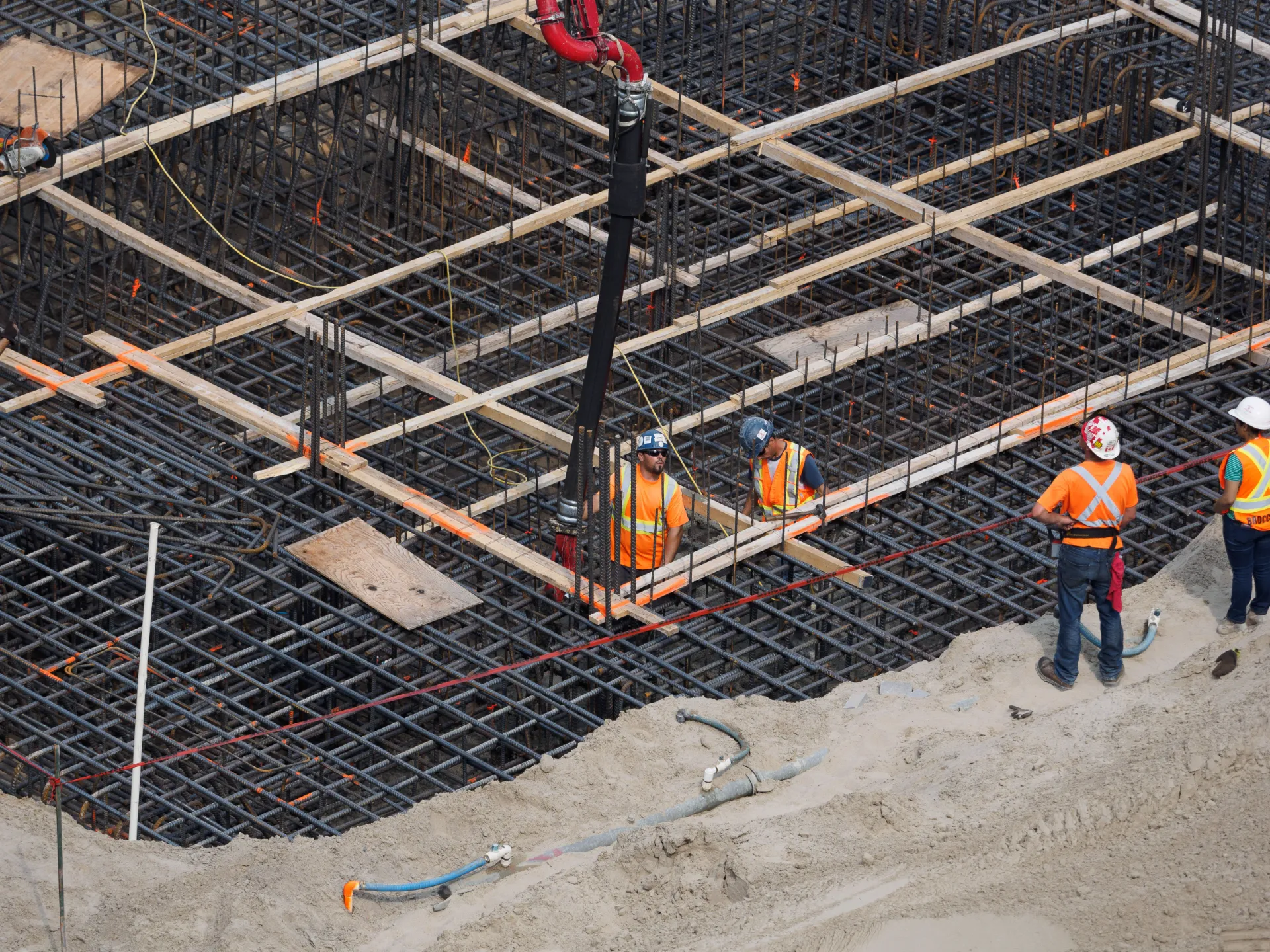
Prepare more informed bids with detailed construction takeoffs and cost estimates.
Cannon Estimation supports Georgia contractors, builders, subcontractors, and developers with estimating services for residential, commercial, multifamily, industrial, and sitework projects.
From Atlanta and its surrounding counties to Savannah, Augusta, Columbus, Macon, and other Georgia communities, we provide remote estimating support for projects throughout the state.
Share your project details to get started with your Georgia construction estimate.
Georgia has a diverse construction market, with projects ranging from single-family homes and multifamily developments to commercial buildings, warehouses, industrial facilities, and public infrastructure.
The estimating requirements for these projects can vary considerably. A residential contractor may need detailed quantities for foundations, framing, roofing, drywall, and finishes. A commercial subcontractor may need a trade-specific takeoff, while a general contractor may require a broader cost estimate covering several construction divisions.
Cannon Estimation provides Construction Estimating Services Georgia contractors can use to organize project quantities and prepare more informed bids.
Our estimating work is based on the construction documents and scope provided. We review available plans and specifications, measure relevant work items, and prepare estimating information according to the requested service.
Request a Free Quote →
Measured quantities organized by trade, so a bid is built on the drawings, not on broad assumptions.
Estimating from the documents supplied, for projects in metropolitan areas, regional cities, and smaller communities alike.
Inclusions, exclusions, and assumptions documented so missing quantities do not stay hidden.
Georgia’s construction activity extends across several distinct regional markets. These regional differences matter when preparing estimates. Project location, site conditions, specifications, material availability, labor pricing, and construction schedule can all influence the quantities and cost assumptions used in a bid.
Residential communities, multifamily buildings, office developments, retail, logistics, and industrial projects.
Port-related logistics, industrial facilities, commercial development, hospitality, and residential construction.
Healthcare, institutional, residential, commercial, and industrial construction.
Residential, commercial, manufacturing, and institutional projects.
Residential development, healthcare, education, commercial construction, and transportation-related work.
Residential, multifamily, education-related, healthcare, and commercial projects.
Cannon Estimation supports different project types and construction scopes. The exact estimating scope is established according to the plans, specifications, and services requested.
Residential construction estimating involves measuring the building components, materials, and finishes required for a home or residential development.
Residential takeoffs may include concrete, foundations, framing lumber, sheathing, roofing, insulation, drywall, flooring, painting, doors, windows, and other specified materials.
Request an Estimate →Commercial projects may involve multiple trades, detailed specifications, and coordination between general contractors and subcontractors.
Depending on the project documents, commercial quantities may include concrete, masonry, structural steel, metal framing, drywall, ceilings, flooring, painting, roofing, and building systems.
Request an Estimate →Georgia’s logistics and industrial markets include warehouse, distribution, and manufacturing facilities. These projects can require extensive quantities for structural components, concrete, roofing, sitework, and building systems.
A clearly defined industrial estimating scope helps separate building work from site improvements and specialized equipment or process-related items.
Request an Estimate →Multifamily developments require coordination across repeated residential units, shared spaces, common building systems, and site improvements.
For these projects, it is useful to separate repeated unit quantities from shared building components. This makes it easier to review differences between unit layouts, finish schedules, and common-area requirements.
Request an Estimate →Mechanical, electrical, and plumbing systems are important parts of many residential, commercial, and industrial construction budgets.
The estimate should distinguish measurable quantities from allowances and items that require additional design information.
Sitework estimating covers the preparation and improvement of the land surrounding a construction project. It may involve grading, excavation, utilities, drainage, paving, and landscaping.
For earthwork, it is important to distinguish bank, loose, and compacted volumes. These quantities are not interchangeable and can affect hauling, material ordering, and equipment calculations.
Subcontractors may need estimating support for one trade rather than a complete building estimate. Cannon Estimation can support trade-specific takeoff requests based on the project documents and defined scope.
A defined trade scope helps contractors review inclusions and exclusions and reduces the chance of overlapping quantities between subcontractor packages.

A construction takeoff measures the quantities of materials and work items required by a project. It provides an important foundation for estimating, purchasing, and bid preparation.
Cannon Estimation provides construction takeoff support for contractors who need organized quantities from their project drawings.
Material Takeoff vs. Construction Cost Estimate: A material takeoff and a complete construction cost estimate are related, but they are not identical. Material takeoff: measures quantities of materials and work items shown in the project documents. Construction cost estimate: applies relevant pricing to the measured scope. Depending on the requested service, this may include material, labor, equipment, subcontractor costs, and other project-specific cost components.
A subcontractor may need only a trade-specific quantity takeoff, while a general contractor may need a broader estimate to evaluate the expected cost of a project.
Request a Takeoff →| Construction category | Examples of measured items |
|---|---|
| Concrete | Slabs, footings, foundations, walls |
| Framing | Lumber, studs, plates, sheathing |
| Masonry | Blocks, bricks, mortar-related quantities |
| Roofing | Roof areas, underlayment, specified accessories |
| Drywall | Wallboard, ceilings, partitions |
| Flooring | Tile, carpet, resilient flooring, hardwood |
| Painting | Paintable wall and ceiling areas |
| Insulation | Wall, roof, and floor insulation |
| Electrical | Fixtures, devices, conduit and wiring quantities |
| Plumbing | Pipe, fittings, fixtures and related components |
| HVAC | Ductwork, equipment and distribution components |
| Sitework | Excavation, grading, aggregate and paving |
A reliable Georgia construction estimate should reflect the project location, applicable code requirements, site conditions, and construction documents. Conditions in Atlanta may differ from those in Savannah, the Appalachian foothills of North Georgia, or the rural communities of South Georgia.
Georgia’s Department of Community Affairs (DCA) maintains the state’s construction code program. The current mandatory code framework includes:
The updated 2024 ICC code editions and the 2026 Georgia Amendments to the 2023 National Electrical Code became effective January 1, 2026. Georgia’s energy-code adoption is listed separately by DCA, so the applicable edition and amendments should be checked rather than assumed to match the other codes.
Local jurisdictions may also have administrative requirements and applicable local amendments. Contractors should confirm the governing requirements with the relevant building department.
For estimating, code requirements can influence specified assemblies, materials, fire protection, accessibility, insulation, equipment, and other construction components.
Georgia’s humid climate and rainfall patterns can influence construction detailing and material selection. Depending on the project, relevant considerations may include:
Estimators should use the actual construction documents and specifications rather than adding generic allowances that are not supported by the project scope.
Projects along the Georgia coast may require particular attention to wind design criteria, flood-related requirements, drainage, and specified exterior assemblies.
Savannah, Brunswick, St. Simons Island, and other coastal communities can have project conditions that differ from inland locations. Wind design, flood elevation, site drainage, and applicable local requirements should be confirmed from project-specific documents and authorities.
Georgia construction sites can involve different soil profiles, slopes, groundwater conditions, and excavation requirements.
Sitework and foundation estimates may be affected by:
For earthwork and foundation estimating, review civil plans, grading information, and geotechnical reports where available.
Construction pricing can differ between metropolitan Atlanta, coastal communities, smaller cities, and rural areas. Transportation, supplier availability, subcontractor coverage, project size, and schedule may affect the pricing assumptions used in a cost estimate.
A statewide average should not be treated as an exact cost for an individual project. Pricing should be reviewed against the project location and bid date.
Site development projects may require stormwater management, drainage improvements, sediment control, and erosion-prevention measures.
Depending on the site and project scope, estimating may need to account for:
The applicable scope should be taken from civil plans, permits, specifications, and project requirements.
Even when construction drawings are available, preparing a complete bid can require substantial measurement, coordination, and pricing work.
Architectural, structural, civil, and MEP plans may contain missing details or inconsistent information.
Estimating approach: Identify unclear items, document assumptions, and request clarification where missing information could materially affect quantities or costs.
Material costs and availability can change between the initial estimate and bid submission.
Estimating approach: Use current project-relevant pricing where available and record the date and assumptions behind significant cost inputs.
Commercial and multifamily projects can involve several subcontractors with overlapping or connected scopes.
Estimating approach: Separate quantities by trade and define inclusions and exclusions so the bid package can be reviewed clearly.
Estimating teams may need to prepare several bids within a short period.
Estimating approach: Organize drawings, specifications, addenda, and bid instructions before beginning the takeoff. Outsourced estimating support can provide additional capacity when internal resources are limited.
Excavation, grading, drainage, and utility work can involve multiple drawings and site-specific assumptions.
Estimating approach: Review civil plans and geotechnical information, confirm units of measurement, and distinguish bank, loose, and compacted quantities where applicable.
Outsourced construction estimating can help contractors manage workload when internal estimating resources are limited or several bids are due at the same time. Consider outside estimating support when:
An outsourced estimator prepares the agreed estimating work from the documents provided. The contractor remains responsible for reviewing the estimate, confirming final supplier and subcontractor pricing, and submitting the bid.
The fee for professional estimating services depends on the work required to review, measure, and price the project scope. It is separate from the construction cost of building the project.
Cannon Estimation provides project-based quote information after reviewing the available drawings and requested services. We do not apply one universal estimating fee to every Georgia project because the work involved can vary significantly.
Factors that can affect estimating service fees:
Factors that affect construction costs:
Request a project-specific estimating quote: to request a quote, provide your construction drawings, project location, project type, required trades, and bid deadline. Cannon Estimation can review the information and clarify the estimating scope before work begins.
Request Your Estimating Quote →Cannon Estimation provides remote construction estimating support for projects throughout Georgia. Our service coverage includes metropolitan areas, regional cities, and smaller communities. Tap a region to view its communities.
We support estimating requests for projects in the Atlanta metropolitan area and surrounding communities.
Estimating support is available for projects in central Georgia communities.
We can assist with project estimating in coastal and southeast Georgia communities.
Our remote estimating coverage also includes communities in Northeast and East Georgia.
We support estimating requests for projects in communities in West and Southwest Georgia.
The communities listed above are examples of statewide coverage, not a complete list of every Georgia municipality.
The following are representative ZIP codes associated with selected Georgia communities. This is a geographic reference list, not an exhaustive USPS postal-code directory.
| City or area | Representative ZIP codes |
|---|---|
| Atlanta | 30303, 30305, 30306, 30308, 30309, 30310, 30318, 30324 |
| Sandy Springs | 30328, 30342, 30350 |
| Roswell | 30075, 30076 |
| Alpharetta | 30004, 30005, 30009, 30022 |
| Marietta | 30060, 30062, 30064, 30066, 30067, 30068 |
| Smyrna | 30080, 30082 |
| Kennesaw | 30144, 30152 |
| Woodstock | 30188, 30189 |
| Gainesville | 30501, 30504, 30506, 30507 |
| Cumming | 30040, 30041, 30028 |
| Lawrenceville | 30043, 30044, 30045, 30046 |
| Duluth | 30096, 30097 |
| Decatur | 30030, 30032, 30033 |
| McDonough | 30252, 30253 |
| Newnan | 30263, 30265 |
| Fayetteville | 30214, 30215 |
| Athens | 30601, 30605, 30606 |
| Augusta | 30901, 30904, 30906, 30907, 30909 |
| Columbus | 31901, 31904, 31906, 31907 |
| Macon | 31201, 31204, 31206, 31210, 31216 |
| Warner Robins | 31088, 31093, 31098 |
| Savannah | 31401, 31404, 31405, 31406, 31419 |
| Pooler | 31322 |
| Statesboro | 30458, 30460 |
| Brunswick | 31520, 31523, 31525 |
| Valdosta | 31601, 31602, 31605 |
| Albany | 31701, 31705, 31707 |
| Rome | 30161, 30165 |
| Dalton | 30720, 30721 |
| LaGrange | 30240, 30241 |
| Douglasville | 30134, 30135 |
| Carrollton | 30116, 30117 |
| Thomasville | 31792 |
ZIP codes are postal delivery identifiers and do not necessarily match city limits or county boundaries. A project address is the best reference for confirming the location and applicable jurisdiction.
Georgia’s state FIPS code is 13. County FIPS identifiers combine the state code with a three-digit county code. Examples include:
| County | County FIPS / GEOID |
|---|---|
| Bibb County | 13021 |
| Chatham County | 13051 |
| Cherokee County | 13057 |
| Clarke County | 13059 |
| Clayton County | 13063 |
| Cobb County | 13067 |
| DeKalb County | 13089 |
| Fayette County | 13113 |
| Forsyth County | 13117 |
| Fulton County | 13121 |
| Gwinnett County | 13135 |
| Hall County | 13139 |
| Henry County | 13151 |
| Muscogee County | 13215 |
| Richmond County | 13245 |
Correction for geographic data use: Hall County’s full five-digit GEOID is 13139. Use the five-digit format when identifying a county GEOID.
These identifiers are useful for geographic datasets and research. They are not ZIP codes, and they do not replace a project’s street address or permitting jurisdiction.
A clear estimating process helps contractors understand what information is needed and what the assignment includes.
Send the available drawings, specifications, addenda, and bid instructions. Include the project city or address in Georgia so the location can be considered during the estimate.
Identify whether you need a material takeoff, trade-specific estimate, or broader construction cost estimate. The required trades and level of detail should be established before work begins.
The estimator reviews the supplied documents to understand the project scope, identify measurable items, and note information that may require clarification.
Relevant construction components are measured from the available plans. Quantities are organized by trade or category according to the agreed scope.
Where a cost estimate is requested, applicable pricing assumptions can be used for materials, labor, equipment, and other requested cost components. Pricing should be reviewed against current supplier and subcontractor information where appropriate.
The completed estimating work is provided according to the agreed deliverables. The contractor can review the quantities, assumptions, and scope before using the information in a bid.
Providing complete project information helps reduce avoidable assumptions and clarification requests. When available, submit:
If some documents are missing, let us know. The estimate may still be possible, but missing information may need to be identified as an assumption, exclusion, or item requiring clarification.
The following is an educational example showing how a basic quantity calculation works. It is not an actual Cannon Estimation project or a quoted Georgia construction price.
Example: Concrete Slab Takeoff
Assume a rectangular concrete slab has these dimensions: length 40 feet, width 30 feet, thickness 6 inches, or 0.5 feet.
Step 1: Calculate the slab area
40 ft × 30 ft = 1,200 square feet
Step 2: Calculate the concrete volume
1,200 sq. ft. × 0.5 ft = 600 cubic feet
Step 3: Convert cubic feet to cubic yards
600 ÷ 27 = 22.22 cubic yards
The theoretical concrete volume is approximately 22.22 cubic yards before project-specific adjustments.
A real estimate must also review slab details, thickened edges, footings, openings, reinforcement, subbase, waste allowances, and other specified requirements. The final order quantity should be based on the complete construction documents and project conditions.
Discuss Your Project →Choosing an estimating partner involves more than comparing a service fee. Contractors need a clear scope, understandable quantities, and estimating information that can be reviewed before a bid is submitted. Cannon Estimation supports contractors with:
Your project does not need to be near our Pennsylvania location. We provide remote estimating support for construction projects throughout Georgia.
Estimating support can be requested for residential, commercial, multifamily, industrial, renovation, and civil or sitework projects.
Contractors and subcontractors can request estimating support for the particular trades included in their bid packages.
A clearly organized takeoff helps contractors review measured quantities and identify the materials and work items included in the estimate.
Estimating service fees depend on the project documents, requested scope, and level of detail. We review the assignment before confirming the quote.
Providing the project requirements and bid deadline at the start helps establish the scope and expectations for the estimating assignment.
Find answers to common questions about our construction estimating services in Georgia, scope, pricing, and project requirements.
Yes. Cannon Estimation provides remote estimating support for projects throughout Georgia, including Atlanta, Marietta, Sandy Springs, Alpharetta, Savannah, Augusta, Columbus, Macon, Athens, Gainesville, Valdosta, and other communities.
Estimating support can cover residential, commercial, multifamily, industrial, warehouse, renovation, and civil or sitework projects. The available scope depends on the drawings and services requested.
Yes. Construction takeoff services can include measuring materials and work items from architectural, structural, civil, and trade drawings. The takeoff scope is defined according to the project requirements.
A material takeoff measures the quantities of materials and work items shown in the project documents. A cost estimate applies relevant pricing to those quantities and may include material, labor, equipment, subcontractor, and other requested cost components.
The fee depends on project size, drawing complexity, number of trades, required detail, document completeness, and deadline. Contact Cannon Estimation with your plans and scope requirements to request a project-specific quote.
Yes. Residential estimating can cover single-family homes, custom homes, townhouses, multifamily developments, additions, and renovations. Relevant quantities may include concrete, framing, roofing, drywall, insulation, flooring, and finishes.
Yes. Commercial estimating requests may include office buildings, retail spaces, restaurants, healthcare facilities, educational buildings, tenant improvements, and commercial renovations in Atlanta and other Georgia communities.
Yes. Trade-specific estimating requests may cover concrete, masonry, framing, drywall, roofing, flooring, painting, electrical, plumbing, HVAC, and other defined scopes.
The most useful documents are architectural, structural, civil, and MEP drawings, along with specifications, addenda, and bid instructions. The project location, required trades, and bid deadline are also helpful.
Yes. Adopted construction codes and applicable Georgia amendments influence specified materials, assemblies, and construction requirements. The 2024 International Building Code and Residential Code with Georgia Amendments, along with other updated mandatory codes, became effective January 1, 2026. Project-specific requirements should be confirmed with the relevant jurisdiction.
Estimating requests may include excavation, grading, cut-and-fill, backfill, trenching, drainage, underground utilities, aggregate, paving, and other site improvements. Civil plans and geotechnical information help establish the relevant quantities and assumptions.
You can request a quote for your estimating assignment. A quote or consultation is not the same as a completed free construction estimate. The scope and fee are confirmed before estimating work begins.
Turnaround depends on project size, drawing complexity, number of trades, document completeness, and current workload. Share your bid deadline when requesting a quote so the required schedule can be reviewed.
No. Cannon Estimation serves construction projects across all 50 U.S. states. Georgia is one of the locations covered by our nationwide remote estimating services.
Preparing a construction bid requires a clear understanding of quantities, scope, and project costs. Whether you are a general contractor preparing a complete bid or a subcontractor pricing a specific trade, organized estimating information can help you review your project before submitting a proposal.
Cannon Estimation provides Construction Estimating Services Georgia contractors can request for residential, commercial, multifamily, industrial, and sitework projects.
Send us your project drawings, location, required trades, and bid deadline to request a quote.
Request a Free Quote → Call: 215-540-6190Cannon Estimation
Call: 215-540-6190
Email: info@cannonestimation.com
Location: Allentown, PA 18103
Remote estimating support available for projects throughout Georgia and all 50 U.S. states.
